
What ChatGPT Doesn't Know About Your Firm
October 07, 2026
Many architecture firms are invisible to AI search, but they don't have to be.
A couple is sitting at their kitchen table, laptop open. They've been thinking about this for a decade — the house they'll grow into, not out of. Three acres they bought years ago, overlooking water. A real budget, finally. They're ready to find an architect.
They don't open Google. They open ChatGPT.
"We're looking for an architect for our forever home.
"We want someone who does thoughtful residential work on wooded sites, respects regional materials, and designs houses that feel modern without being austere.
"We're planning for aging in place but also want generous spaces for grown kids visiting.
"Who should we talk to?"
ChatGPT answers. It names three firms, and describes what makes each one a potential fit. The couple visits the firms' websites, picks their favorites, and reaches out.
Your firm might be one of the three. Or might not be.
This isn't a hypothetical future scenario. This is how a growing share of your prospective clients — especially the ones with the budgets you actually want — are starting their search right now.
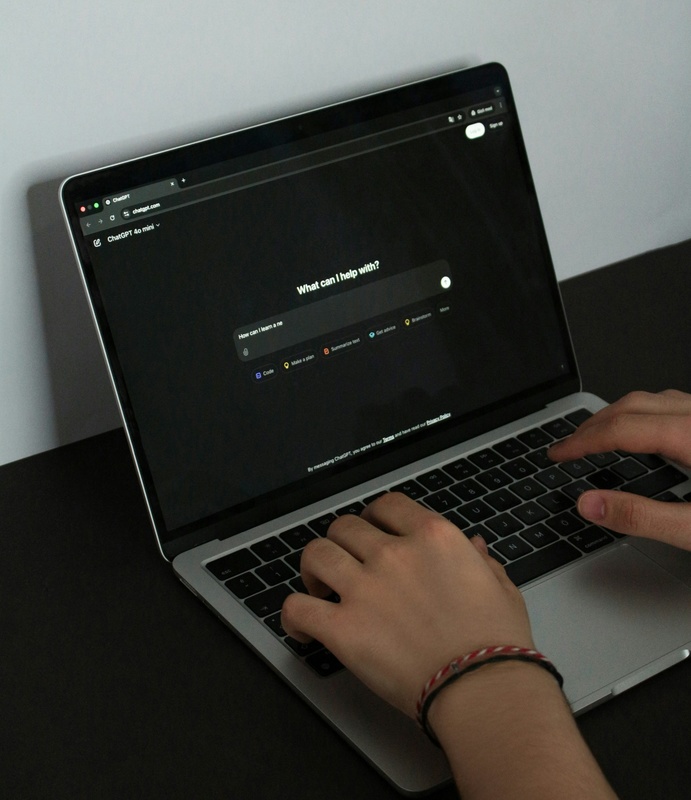
The shift to AI Search Engines is already happening.
ChatGPT alone now handles billions of queries a month, and professional services are one of the fastest-growing categories inside that. Perplexity, Claude, Google's own AI Overviews — all of them are increasingly how people find lawyers, accountants, consultants, and architects. The traditional search box is still there. It just isn't the only one anymore.
Any shift in how prospective clients find you is worth paying attention to. Is your firm one of the handful that shows up when AI gets asked?
Compared to Google, AI Search gives more nuanced results
Traditional Google search is mostly a "winner-takes-all" blunt instrument. When a prospective client searches "Architect in Denver," Google returns results optimized for those keywords. It doesn't know anything about the person searching. Even with all that Google knows about us, every searcher still gets roughly the same answer.
But AI assistants are different. They really know their users. By the time a client asks ChatGPT or Claude for architect recommendations, the system has often learned who they are — their taste, their lifestyle, their budget range, the kind of house they've been describing in other conversations. It can match them to firms based on fit, not just keywords.
For architects who are able to talk about their work online, this is a huge opportunity. The prospects AI sends you are likely to be better qualified than the ones Google sends. More likely to be a real fit. Less of your sales time wasted. The firms that understand this and are able to act on it early get a flow of warmer leads than their competitors stuck in the Google-only world.
But you need to understand how they think...
AI Search Engines really know their users. For architects, this is a huge opportunity.

How AI search actually works.
Setting aside the magic, AI search engines are not that mysterious. In fact, in one important way they're a lot like Google: they crawl the web, traveling across links from site to site, absorbing what they find. Everything they encounter goes into a vast index of information they can draw on later when someone asks them a question.
What's different is how they handle that index.
AI engines have budgets.
Running a language model is expensive, and these systems don't ponder every page they encounter — they skim, extract what's clear, and move on. The easier your website makes it to understand what your firm does, who you serve, and what makes you distinctive, the more likely an AI engine is to retain that information and surface it later. The harder you make it, the more likely you are to be skipped.
And AI engines process language.
They understand text. What they struggle with — still, and probably for a while — is interpreting images without accompanying words. A photograph of a stunning home means almost nothing to ChatGPT. Where it excels is when the photo is accompanied by detailed write ups describing what the home does, who it was built for, and what the firm did for their client.
But AI engines don't just trust what you say about yourself. They cross-reference.
A firm that's only described in its own words on its own site is operating with one data point. You can say anything on your own site! AI doesn't just believe it. But a firm that's referenced in trade publications, cited by partner firms, mentioned in client case studies elsewhere on the web, and listed in industry and general online directories gives AI multiple reinforcing signals.
When ChatGPT is deciding whether to include you in a specific recommendation for a specific job, confidence matters. More reinforcing signals, more confidence, more likely to be named.
Why many architecture firm websites are often invisible to AI.
Architecture firm websites, as a category, tend to be beautiful and quiet.
The homepage is a grid of stunning photography. Project pages are galleries, often labeled by location. The About page describes your firm in language that could describe any firm — and actually, if you look at your competitors' websites and read the words on them, you'll find they're often very similar. The services section is often identical between firms.
There's not much text, and the text that exists is often decorative — captions that name things without explaining them, headlines that establish mood without conveying meaning.
To another architect, or to a prospect already fluent in the language of design, this can be enough. The work speaks for itself.™ Right?
But to an AI engine trying to understand what the firm does, who it serves, and if it's a good match for this particular user, this is close to invisible. There are beautiful images AI can't read. There are location labels that tell AI nothing about the project. There are generic descriptions that don't distinguish this firm from any other. When ChatGPT is asked to recommend an architect for a thoughtful residence on a wooded site, there's almost nothing on the typical architecture firm site that tells the system "yes, that's us — here's why."

The firms getting surfaced by AI to the buyers they'd most like to work with are the ones who've broken this pattern.
They write about their work in specific, substantive language. They explain the thinking behind projects, not just show the results. They name what makes them different in words a non-architect can understand. They publish writing that goes beyond portfolio captions — essays, project narratives, perspectives on their craft.
This isn't a problem unique to AI. The same architecture firm website that's invisible to ChatGPT is also failing a prospective client who's browsing it on a Tuesday evening and can't quite tell what makes the firm different from the three others they've looked at. The clarity that makes a site findable by AI is the same clarity that makes it compelling to humans.
We've written about this at length in a separate essay: Storytelling matters for architecture firm websites
What AI visibility actually requires.
If your firm wants to be found by AI engines, three kinds of work matter most.
First: the content itself.
Your website has to say what it does, in substantive, specific language that both humans and AI can read and understand.
This means writing about your work beyond the caption level — project narratives that explain what you did and why, perspectives on your craft, specifics about who you serve and how you work.
The firms that get surfaced by AI are the ones with real text on their sites, not just portfolios. This is the pillar architects can absolutely begin working on themselves. Open a project page. Rewrite the caption. Explain what the project actually was and what you brought to it. Do this across a few projects and you've already moved ahead of most of your competitors.
Second: the technical layer.
AI engines read websites more efficiently when the underlying structure makes it easy for them.
Schema markup — code embedded in your site that explicitly tells search engines "this is a firm, this is its location, these are its services, this is a project it completed" — is the current standard for signaling clearly to both Google and AI. There are also newer protocols emerging specifically for AI readability.
This layer isn't visible to human visitors but it has real impact on how your firm shows up in machine-generated answers. There are other technical factors that affect your rankings but this is the most AI-specific. Most architecture firm websites have little to none of this in place.
Third: off-site signals.
AI engines don't just read your website. They cross-reference what you say about yourself against what the rest of the web says about you.
Being referenced in trade publications, cited in client case studies on partner sites, listed in industry directories, mentioned on AIA chapter pages, included in roundups — all of this builds the signal that tells AI your firm is real, credible, and worth citing.
The firms with strong off-site presence have an enormous advantage when it comes to AI results.
The firms with a single mention in a print magazine seven years ago and nowhere else online are at a quiet disadvantage that compounds over time.

Each of these pillars matters. Together they determine whether your firm shows up when a prospective client asks ChatGPT for a recommendation.
Most architecture firms are starting from zero on all three of these. That's good news — because the firms that act now get real competitive advantage while the rest wait.
The content pillar is where to start. Open a project page. Rewrite (extend) the caption into a real case study. Explain what the project actually was and what you brought to it. Do it again. That alone will move you ahead of most of your peers for AI. Yes, the structure and semantics matters, but don't get bogged down in that now. And guess what: being able to talk about what makes your work distinctive and special is what most prospective clients are going to be looking for as well. (See our article about that here.)
For the technical and off-site pillars, it's worth having a conversation with people who do this work every day. If that's something you'd like to talk about, we're here.